We drove down from Ontario to Baltimore for the Easter long weekend — roughly 8 hours through upstate New York, across the Peace Bridge, and down I-81 through Pennsylvania. The original plan was simple: go see the cherry blossoms in DC. But once you start looking at a map and realize how much is packed into the Baltimore-DC-Virginia corridor, a “cherry blossom trip” quickly becomes a 3-day, four-state adventure.
And that’s exactly what happened. Over three days, we hit cherry blossoms at peak bloom, stood in front of one of the most powerful waterfalls on the East Coast, walked through George Washington’s actual estate, rode a Ferris wheel at sunset overlooking the DC skyline, spent a rainy day inside a world-class aquarium and science centre, handled Cold War spy gadgets at the International Spy Museum, and hiked to a rock where Thomas Jefferson once stood and declared the view “worth a voyage across the Atlantic.”
All of this with two kids — ages 8 and 4. Here’s every stop, what we did, what was worth it, and what you need to know if you’re planning a similar trip.

The Road Trip Down: What to Know
The drive from the Greater Toronto Area to Baltimore is about 7.5-8 hours depending on border wait times. We crossed at the Peace Bridge in Buffalo, then took I-81 South through Pennsylvania — a scenic route that cuts through rolling Appalachian hills. A few tips for the drive:
- Cross the border early. We left at 5 AM Friday and hit the Peace Bridge with almost no wait. By 8 AM the line can be 30+ minutes.
- Pack snacks and entertainment. With a 4-year-old and 8-year-old in the back seat for 8 hours, you need a plan. Audiobooks, downloaded shows on tablets, and a cooler bag with sandwiches and fruit kept everyone happy.
- Fill up before crossing into the US. Gas is cheaper in Ontario, and you won’t find Canadian prices on the other side.
- The I-81 corridor through Pennsylvania is beautiful but has long stretches without services. Don’t let the tank get below half.
The anticipation builds as you get closer to Baltimore — the kids were counting down the miles. When you finally see the Inner Harbor skyline, the trip feels real.
Full Outdoor Day
DC Cherry Blossoms, FDR Memorial, Great Falls, Mount Vernon, National Harbor
☀️ 29°C — Sunny and hotSaturday was a gift from the weather gods — 29°C and full sunshine. We had rearranged our entire itinerary around this forecast, pushing every outdoor activity to Saturday. That decision alone made the trip.
Things to bring for a full outdoor day in DC
- Sunscreen and hats — April in DC can surprise you. 29°C with no shade at the Tidal Basin means you’ll burn fast.
- Comfortable walking shoes — we walked over 15,000 steps on Saturday alone. The Tidal Basin loop is 2 miles, Great Falls has trail walks, Mount Vernon is a huge estate.
- A refillable water bottle per person — the monuments area has water fountains, but Great Falls and Mount Vernon can get hot with limited options.
- A stroller or carrier for the little one — our 4-year-old lasted about 70% of the day on foot. The rest was piggyback rides.
Tidal Basin Cherry Blossoms
Washington DC — 45 min from Baltimore
This is the reason we drove 8 hours. And it delivered beyond anything we expected.
The 2-mile Tidal Basin loop with the Jefferson Memorial as a backdrop, thousands of cherry trees in full peak bloom, 29°C sunshine, and that soft pink canopy filtering the morning light — it’s genuinely one of the most beautiful places I’ve seen anywhere. The photos don’t fully capture it. There’s a warmth and a fragrance in the air that you only get during peak bloom week.
We arrived at 8:30 AM and had space to breathe, wander, and let the kids run between the trees. By 10 AM the crowds were intense — families, tour groups, photographers with tripods. Getting there early is not optional, it’s essential.
The 4-year-old couldn’t stop picking up fallen blossoms from the ground. The 8-year-old wanted to know why the trees were pink and not white (some are Yoshino, some are Kwanzan — we learned that from a ranger on-site).
What you can do here:
- Walk the full 2-mile loop around the Tidal Basin
- Visit the Jefferson Memorial, FDR Memorial, and MLK Memorial — all along the basin
- Photograph the iconic cherry trees reflected in the water
- Let kids run freely on the grassy stretches between trees
- Catch ranger-led talks about the history of the cherry trees (gifted by Japan in 1912)
Must-go recommendation: Don’t just see the cherry blossoms — walk the full loop. The view changes dramatically from each angle, and the FDR Memorial waterfall is right along the path (more on that below). This is a once-a-year experience that’s completely free.

FDR Memorial
Along the Tidal Basin — part of the cherry blossom walk
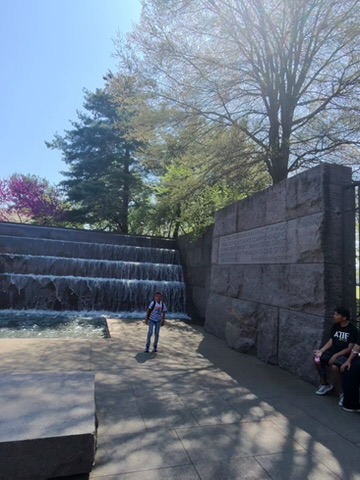
This was an unexpected highlight. The Franklin D. Roosevelt Memorial is built into the Tidal Basin walk, so you don’t even need to make a separate stop — you walk right through it.
What makes it special is the waterfall. A massive granite wall with water cascading down, set in a quiet alcove surrounded by cherry trees. The kids were mesmerised. It’s peaceful, dramatic, and completely different from the typical monument experience. The 8-year-old stood in front of it for a solid five minutes just watching the water.
The memorial is divided into four outdoor rooms, each representing one of FDR’s terms. There are bronze sculptures, quotes carved into stone, and quiet reflecting pools. It’s thoughtfully designed and feels intimate even on a crowded day.
Must-go recommendation: Don’t skip this just because you think you’ve “seen enough monuments.” The FDR Memorial is unlike any other memorial in DC — it’s experiential, not just visual. The waterfall alone is worth the stop, and kids love it.
Great Falls Park
McLean, Virginia — 30 min from DC
One of the most powerful waterfalls on the entire East Coast, just 15 miles from the White House — and most visitors to DC don’t even know it exists. The Potomac roars through a narrow rocky gorge and the sound is incredible. You feel the mist on your face from the overlooks.
Three overlooks connected by easy boardwalk trails make it very doable with young kids. We grabbed Junior Ranger booklets from the Visitor Center — the 8-year-old completed activities on the trail and got sworn in as a Junior Ranger at the end. That badge meant more to him than any souvenir we could have bought.
What you can do here:
- Walk all three overlooks (easy boardwalk, 20-30 min total)
- Do the River Trail for a longer hike along the gorge
- Pick up Junior Ranger booklets at the Visitor Center for the kids
- Watch kayakers navigate the rapids from the overlooks
- Have a picnic at the designated areas near the parking lot
What to bring: Water, sunscreen, and good shoes. The boardwalks are easy but some side trails are rocky. Binoculars are great for watching the kayakers below.
Must-go recommendation: If you’re visiting DC with kids who have any interest in nature, Great Falls is a must. It’s 30 minutes from the city and feels like a completely different world. The Virginia side has the best views — skip the Maryland side unless you want a serious hike.
George Washington's Mount Vernon
Mount Vernon, Virginia — 20 min from Great Falls
A completely different energy from the rest of the day. Mount Vernon is George Washington’s 500-acre estate on a bluff above the Potomac River, and it’s been preserved in remarkable detail.
The 8-year-old got a genuine American history lesson walking through the mansion rooms and seeing how the first president actually lived. The 4-year-old? Completely absorbed by the farm animals roaming the grounds — horses, sheep, chickens, and a working blacksmith shop. Staff in period costume throughout the estate bring everything to life.
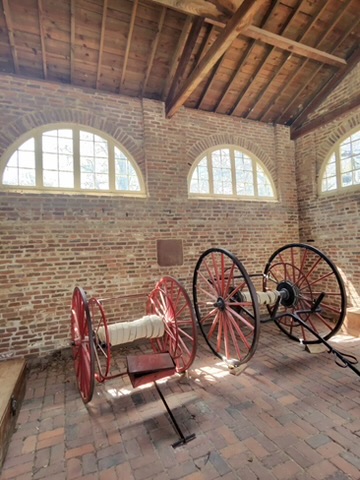
The highlight for us was the original fire house with its red-wheeled hose cart — a beautifully preserved piece of 18th-century firefighting equipment inside a brick building with arched windows. The kids were fascinated that this is how they fought fires in the 1700s.
What you can do here:
- Tour the mansion interior (guided, included in ticket)
- Walk the gardens, farm, and outbuildings
- Visit the museum and education centre
- See the working blacksmith, farm animals, and 18th-century demonstrations
- Walk down to Washington’s tomb
- Enjoy the Potomac River views from the back lawn
Must-go recommendation: Budget a full 2 hours minimum. There’s far more to Mount Vernon than the mansion — the grounds, farm, and outbuildings are where the real experience is, especially with kids. Free parking on-site is a rare luxury near DC. Buy tickets online to skip the line.
National Harbor
Oxon Hill, Maryland — 20 min from Mount Vernon
The perfect Saturday evening closer. We timed it for golden hour and hit the Capital Wheel Ferris wheel at sunset — with DC’s monuments visible across the Potomac, it was one of those moments where everyone just stops and takes it in.
The waterfront boardwalk has restaurants, a carousel, sculptures the kids can climb on, and a lively atmosphere. After a long day of driving and walking 15,000+ steps, this was exactly the right vibe — relaxed, scenic, and the kids still had enough energy for the carousel and ice cream.
What you can do here:
- Ride the Capital Wheel (the views at sunset are incredible)
- Walk the waterfront boardwalk
- Let kids ride the carousel and explore the sculptures
- Dine at waterfront restaurants with Potomac views
- Visit The Awakening sculpture on the beach
Must-go recommendation: Time it for sunset. The Capital Wheel at golden hour is genuinely spectacular. This is the best way to end a long outdoor day — low effort, high reward. Then 30 minutes back to Baltimore.
Full Indoor Day
National Aquarium, Maryland Science Center, International Spy Museum
🌧️ 21°C — Rain all day (First Alert Weather Day)Sunday was a confirmed First Alert Weather Day — 90% rain probability all day. CBS Baltimore had warned about it days in advance. We had originally planned some outdoor activities, but pivoting to a full indoor day turned out to be one of the best decisions of the trip. Baltimore and DC have world-class indoor attractions, and rainy days are when you lean into them.
Things to bring for an indoor museum day
- Layers — museums are aggressively air-conditioned, even when it’s warm outside. The Aquarium especially runs cool.
- No strollers for the Aquarium — they don’t allow them inside (there’s a check area at the entrance). Carry the little one or let them walk.
- Snacks — museum food is expensive and the lines are long on rainy weekends. We packed granola bars and fruit in a small backpack.
- A spare change of clothes for the 4-year-old — the Science Center has water play areas. Trust me on this one.
National Aquarium Baltimore
501 E Pratt St, Inner Harbor
This is a top 3 aquarium in the USA, and it absolutely lives up to the reputation. Five floors of exhibits, each one more impressive than the last. Blacktip reef sharks circling overhead in a massive tank, an Amazon rainforest with two-toed sloths moving through the canopy, Dolphin Discovery, jellyfish galleries that glow in the dark, crocodiles, sea turtles, and a rooftop rainforest.
The 4-year-old was absolutely speechless by the sloths — stood at the glass for 10 minutes straight, pointing and whispering. The 8-year-old was glued to the shark tank and wanted to know every species. We spent a solid 3 hours and honestly could have stayed longer.
The rain actually helped — yes, it was busy (Easter Sunday + rainy weather), but since this is always an indoor attraction, the crowd level wasn’t dramatically worse than a normal weekend.
What you can do here:
- See blacktip reef sharks, dolphins, sea turtles, and sloths
- Walk through the Amazon Rainforest exhibit on the rooftop
- Touch stingrays and horseshoe crabs in the touch pools
- Watch live animal feedings (check the schedule at the entrance)
- Explore the jellyfish gallery — mesmerising for all ages
What to bring: No strollers. Bring a carrier for little ones. The aquarium is dark in many sections, which small children can find either magical or scary — ours loved it.
Must-go recommendation: This is the single must-do in Baltimore with kids. Period. Book 9 AM timed entry tickets online at least a week in advance for holiday weekends. Get there 15 minutes early — the line to enter moves slowly even with timed tickets.
Maryland Science Center
601 Light St — 5 min walk from Aquarium
Three floors of hands-on science, and it hit the sweet spot for both our kids’ ages perfectly. The first floor has a full dinosaur fossil excavation where kids use brushes to uncover bones in sand — the 8-year-old was so absorbed we had to drag him away. The Kids Room (ages 8 and under) has a water table, a Chesapeake crabbing boat replica, and building stations that kept the 4-year-old busy for 45 minutes.
They also run a planetarium show and live science demonstrations throughout the day. Just a 5-minute walk from the Aquarium along the Inner Harbor, so the transition was easy even in the rain.
What you can do here:
- Dinosaur excavation exhibit (first floor — the highlight for older kids)
- Kids Room water play and building area (perfect for under 8)
- Planetarium shows (check schedule, included in admission)
- Live science demonstrations
- Space exhibit with a real rocket engine
Must-go recommendation: This pairs perfectly with the Aquarium for a rainy day. Two hours is the right amount of time before the kids hit their wall. It’s a much better choice than trying to fit in a third major attraction — we learned that the hard way on a previous trip.
International Spy Museum
Washington DC — 45 min drive from Baltimore
We’d originally flagged the Spy Museum as “optional — if the kids have energy.” Well, they did. After a break at the hotel and some rest, the 8-year-old was begging to go, so we made the 45-minute drive to DC.
And it was worth every minute of that drive.
The Spy Museum is unlike any museum experience we’ve had. You start by choosing a cover identity — name, nationality, backstory — and then complete a spy mission as you move through the exhibits. The 8-year-old was completely in character the entire time, checking around corners and whispering to us about his “mission.”
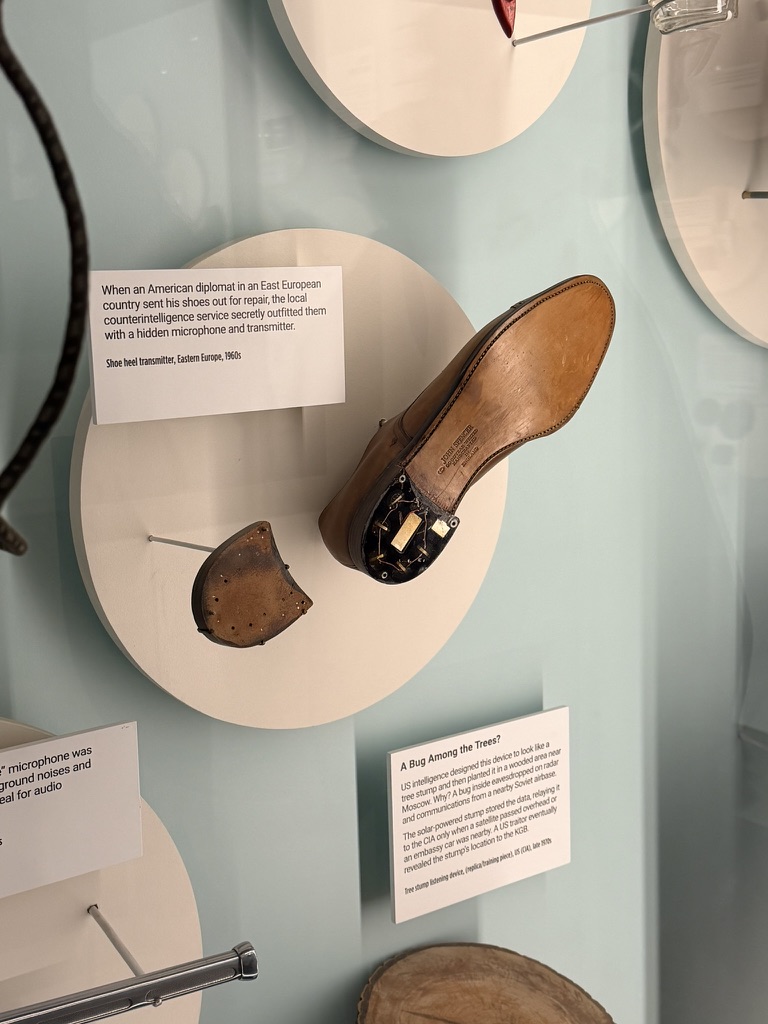
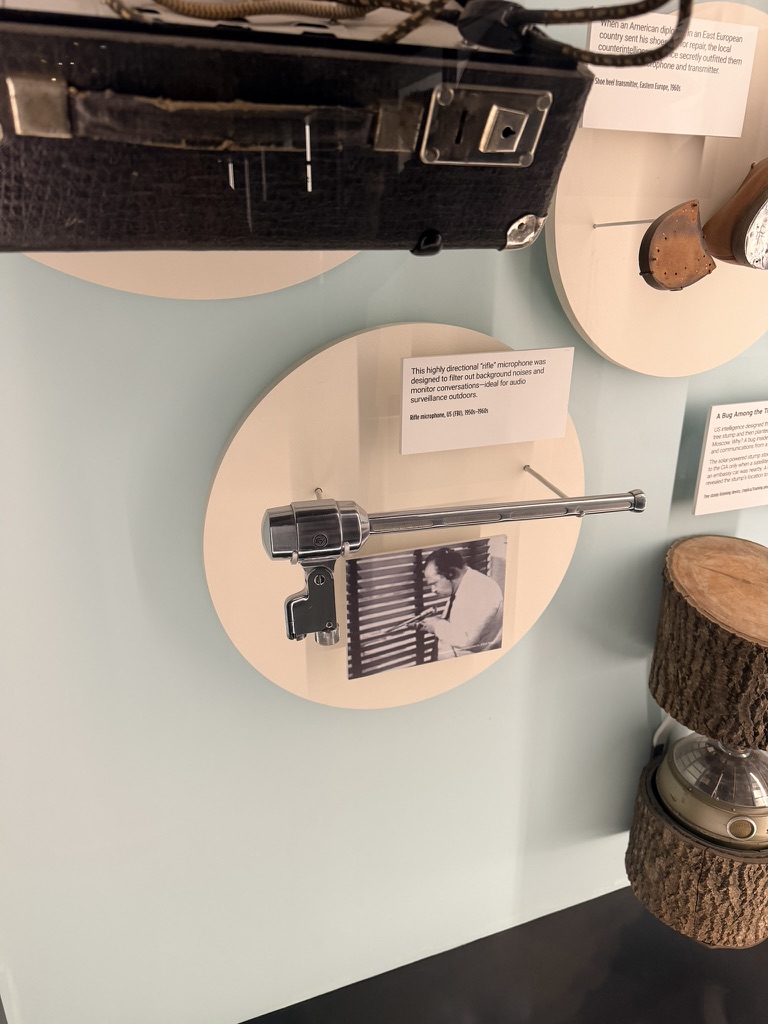
The real spy gadgets on display are mind-blowing. We saw a shoe with a transmitter hidden in the heel — used by Eastern European counterintelligence in the 1960s to bug an American diplomat. They literally waited for the diplomat to send his shoes out for repair and secretly installed a microphone and transmitter in the heel. There’s also a directional “rifle” microphone from the Cold War era, designed to pick up conversations from hundreds of metres away while filtering out background noise. A tree stump that US intelligence designed as a listening device — solar-powered, planted near a Moscow embassy, transmitting intercepted conversations to a satellite.
These aren’t replicas. These are real spy tools from the CIA, KGB, and MI6.
What you can do here:
- Take on a spy cover identity and complete a mission through the museum
- See real Cold War espionage gadgets (shoe transmitters, disguised weapons, cipher machines)
- Test your spy skills with interactive challenges
- Learn about real operations from WWII, Cold War, and modern era
- The gift shop has some great spy gadget toys for kids
What to bring: Just yourselves. This is a fully indoor, climate-controlled experience.
Must-go recommendation: If your kids are 7 or older, this is a must. The interactive spy mission keeps them engaged for the full 2 hours, and the real gadgets on display are fascinating for adults too. Under 7 might find it less engaging — there’s a lot of reading involved in the mission. Evening visits (after 4 PM) tend to be less crowded.
Fells Point Dinner
Baltimore — 10 min from hotel
After the Spy Museum, we drove back to Baltimore and headed straight to Fells Point — a historic cobblestone waterfront district that’s easily the best neighbourhood for dinner in the city.
We went to Thames Street Oyster House for fresh Chesapeake Bay crab. Ordering steamed crabs by the dozen and cracking the shells at the table is the quintessential Baltimore experience. The kids loved the hands-on mess of it — mallets, newspaper-covered tables, butter everywhere. It’s loud, it’s messy, and it’s absolutely perfect.
What you can do here:
- Eat Chesapeake Bay blue crab — this is what Baltimore is famous for
- Walk the cobblestone streets along the waterfront
- Browse the small shops and galleries
- Try Thames Street Oyster House, LP Steamers, or Bertha’s Mussels
Must-go recommendation: Thames Street Oyster House is the top pick. Reserve ahead on weekends — we waited 25 minutes even with a reservation on Easter Sunday. Order the steamed crabs and let the kids go to town with the mallets. A fitting, delicious end to a full day.
Harpers Ferry + Drive Home
A Civil War town where three states meet, then the long drive back to Ontario
⛅ 15°C — Clearing skies, blue sky and sunshineMonday was supposed to be “just the drive home.” But Harpers Ferry, West Virginia is only an hour from Baltimore and sits right on our route. We decided to stop for a couple of hours on the way.
It turned out to be one of the absolute highlights of the entire trip. If you’re driving through this part of the country and skip Harpers Ferry, you’re making a mistake.
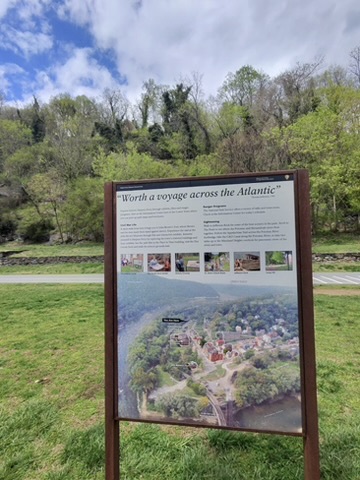
Harpers Ferry National Historical Park
Harpers Ferry, West Virginia — 1 hr from Baltimore
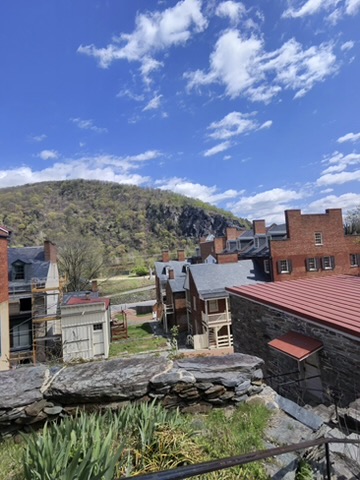
Harpers Ferry is a perfectly preserved Civil War-era town sitting at the exact confluence of the Shenandoah and Potomac Rivers, where three states meet — West Virginia, Virginia, and Maryland. The Appalachian Trail runs right through the middle of town. It’s one of those places that feels like stepping into a different century.
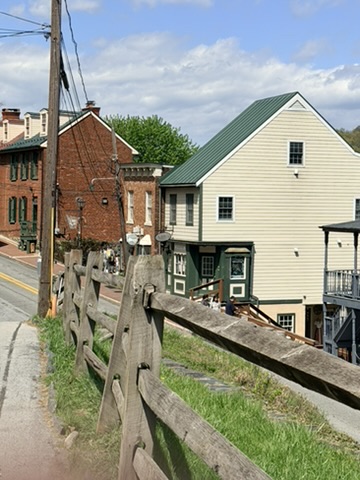
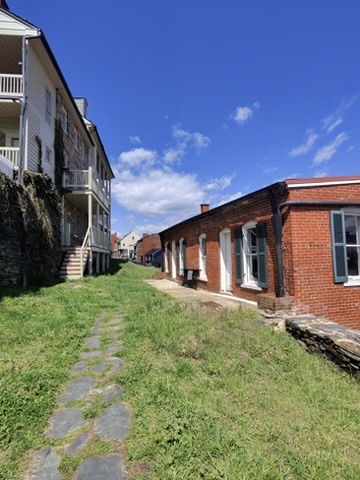
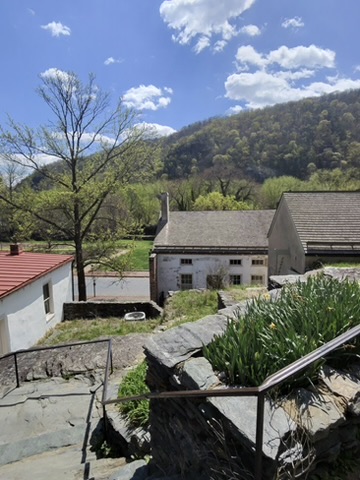
We parked at the Visitor Center and took the free shuttle down into Lower Town. The first thing that strikes you is how well-preserved everything is — brick and clapboard buildings from the 1800s lining narrow streets, with mountains rising on every side. The kids immediately started exploring the stone paths between the old buildings.
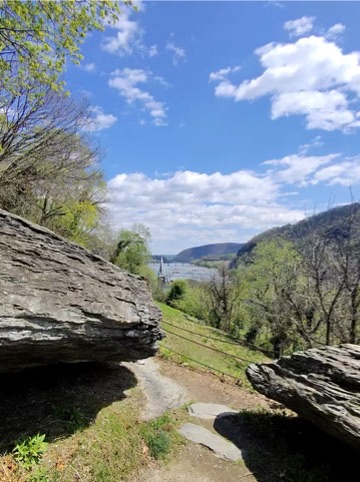
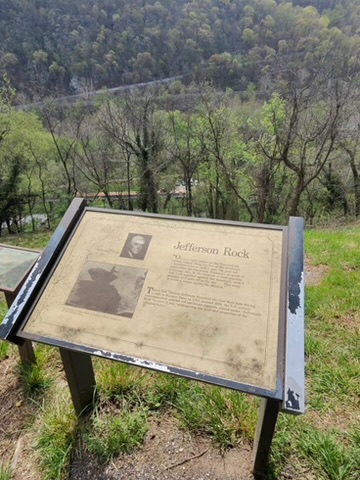
The hike up to Jefferson Rock takes about 20 minutes on a well-maintained trail. Both kids handled it easily — the 4-year-old needed a few rest stops but made it on his own feet. The view from the top is panoramic — you can see the two rivers merging below, the town spread out on the point, and mountains stretching into three states. Thomas Jefferson stood here in 1783 and wrote that the view was “worth a voyage across the Atlantic.” After seeing it ourselves, we completely agree.
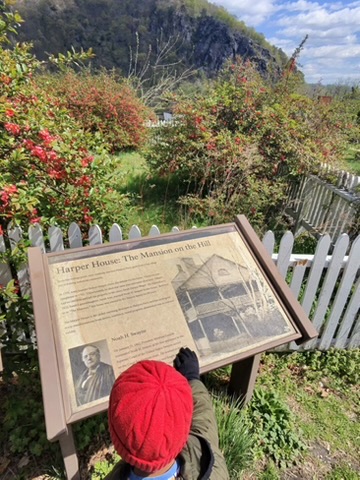
We spent time reading the historical markers throughout the town, learning about John Brown’s raid and the Civil War battles. The kids earned another Junior Ranger badge, and we grabbed breakfast at a cafe in Lower Town before the hike.
What you can do here:
- Hike to Jefferson Rock (20 min, easy for kids, panoramic view of two rivers and three states)
- Walk the Lower Town historic streets and read about Civil War history
- Visit the John Brown Museum and Fort
- Hike a section of the Appalachian Trail (it passes through town)
- Pick up Junior Ranger booklets at the Visitor Center
- Grab breakfast or lunch at the cafes in Lower Town (The Anvil Restaurant is good)
- Cross the pedestrian bridge over the Potomac for views back toward town
What to bring: Good walking shoes (the trails are rocky in spots), water, sunscreen, and the National Park Passport if you collect stamps.
How to have fun with the family: Turn the Lower Town walk into a scavenger hunt — have the kids find specific things mentioned on the historical markers. The Jefferson Rock hike is the right level of challenge for young kids: hard enough to feel like an accomplishment, easy enough that they’ll make it. Let them lead the way.
Must-go recommendation: This is an absolute must-stop if you’re driving through the Baltimore/DC area. Arrive by 8:30 AM before the day-trippers from DC show up. The Jefferson Rock hike is non-negotiable — the view alone justifies the entire stop. From here, it’s about 8.5 hours back to Ontario via I-81 North and the Peace Bridge.
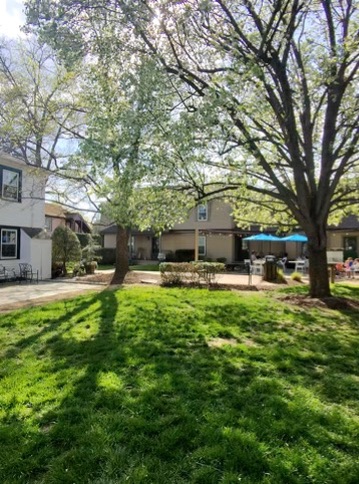
The Drive Home
We left Harpers Ferry around 11 AM and pointed north. The route home takes you through some gorgeous scenery:
- Harpers Ferry to I-81 North through the Shenandoah Valley — rolling hills, farms, and the Blue Ridge Mountains in the distance
- I-81 North through Pennsylvania — the Appalachian ridgeline views are beautiful, especially in spring green
- I-90 West through New York — the final stretch before the Peace Bridge crossing at Buffalo
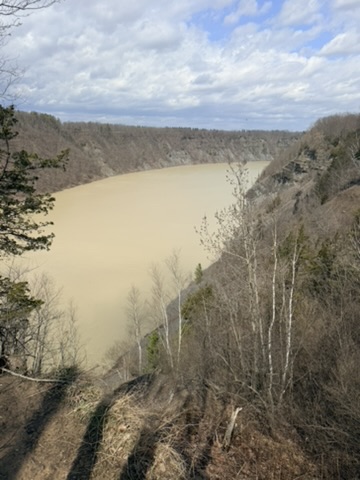
Total drive time was about 8.5 hours including one fuel stop and a quick meal break. We were home by 8 PM — well before midnight, and the kids slept for the last 3 hours of the drive. The Monday departure was key: no weekend traffic, shorter border waits, and a relaxed pace.
Trip Summary and Recommendations
This turned out to be one of the best family road trips we’ve ever done. Three days, four states (DC, Virginia, Maryland, West Virginia), and a mix of nature, history, science, espionage, food, and scenic drives that kept everyone engaged — adults and kids alike.
What worked well
- Weather-based planning: Putting all outdoor activities on the sunny Saturday and all indoor activities on the rainy Sunday was the single best decision of the trip. Don’t fight the weather — build your itinerary around it.
- Early starts: Getting to the Tidal Basin at 8:30 AM and Harpers Ferry at 8:30 AM meant we experienced these places without crushing crowds. By mid-morning both locations were packed.
- Junior Ranger programs: Free, educational, and the badges gave the 8-year-old real pride and a sense of accomplishment. We collected two on this trip (Great Falls and Harpers Ferry).
- Reading the room: We originally planned the Spy Museum as “optional” on Sunday evening. When the kids still had energy after the hotel break, we went — and it was a highlight. Flexibility is everything with young kids.
- The Harpers Ferry stop: Adding this on the drive-home day was brilliant. It broke up the long drive, gave us one more incredible experience, and cost almost nothing (NPS Pass covered entry).
What I’d do differently
- Book the Aquarium tickets earlier. We booked a week out and got 9 AM entry, but 10 AM was already sold out. Two weeks in advance for holiday weekends.
- Bring a change of clothes to the Science Center. The 4-year-old got soaked at the water table. We didn’t have a spare set and he was damp for the rest of the afternoon.
- Skip the car in DC on Saturday morning. If we did it again, we’d park at a Metro station and take the train to the Tidal Basin. DC parking near the monuments on a peak-bloom Saturday is a nightmare.
How much fun can a family have?
A lot. The beauty of this itinerary is the variety — there’s something for every member of the family at every stop. The 4-year-old loved the cherry blossoms, farm animals at Mount Vernon, the aquarium sloths, and the carousel at National Harbor. The 8-year-old loved Junior Ranger badges, the spy mission, the FDR waterfall, and the Jefferson Rock hike. The adults loved Great Falls, Harpers Ferry, the Spy Museum gadgets, and the Fells Point crab dinner.
No one was bored. No one asked “when are we leaving?” (except in the car). That’s the mark of a great trip.
Budget breakdown (family of 4, in USD)
| Item | Cost |
|---|---|
| Gas (round trip from Ontario) | ~$250 |
| Hotel (2 nights, Baltimore Inner Harbor) | ~$400 |
| National Aquarium | ~$140 |
| Maryland Science Center | ~$70 |
| International Spy Museum | ~$66 |
| Mount Vernon | ~$56 |
| Great Falls Park | $20 |
| Harpers Ferry | $20 |
| National Harbor / Capital Wheel | ~$60 |
| Meals (3 days) | ~$350 |
| Total | ~$1,432 USD |
For a 3-day family vacation across four states with this level of variety and quality, that’s excellent value. The cherry blossom experience alone — completely free — is worth the entire drive.
Would I do it again?
In a heartbeat. The cherry blossom timing made this trip special, but even without peak bloom, the combination of DC monuments, Great Falls, Mount Vernon, the Baltimore Aquarium, the Spy Museum, and Harpers Ferry is a genuinely outstanding 3-day family itinerary from Ontario. The drive is long (7-8 hours each way) but manageable, the scenery is beautiful, and there’s more packed into the Baltimore-DC corridor than you could see in a week.
Start planning around the cherry blossom forecast (usually late March to mid-April), check the weather, and be ready to shuffle your days around the sun. It’ll be worth it.